

An Amazing Discovery Confirming the Ancient Words of Numbers 6
One of the most breathtaking archaeological discoveries of the twentieth century was made in 1979 on the rocky slopes southwest of the Old City of Jerusalem. The location was known as Ketef Hinnom, a place overlooking the ancient city where generations had once lived, worshiped, and been buried.
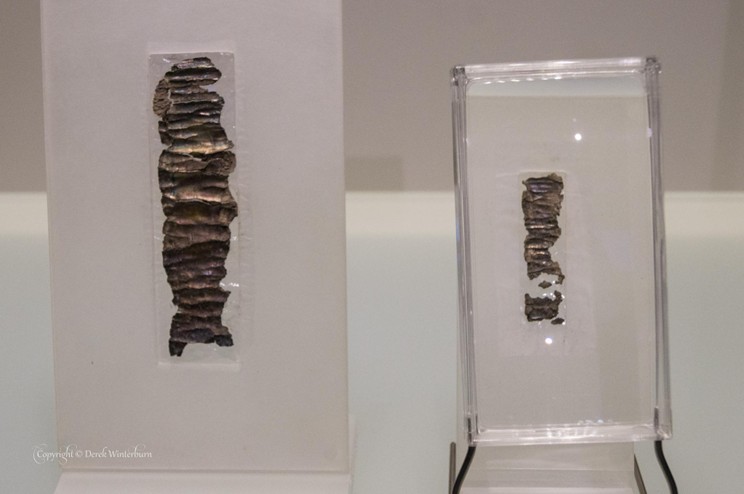
Inside an ancient burial cave, archaeologists uncovered something extraordinary—two tiny silver scrolls that had been carefully rolled into small cylinders and worn as amulets.
At first, the scrolls appeared too fragile to open. Years of corrosion and age had left them extremely delicate. With painstaking care, researchers slowly unrolled the silver strips in a laboratory. What they discovered stunned the archaeological world.
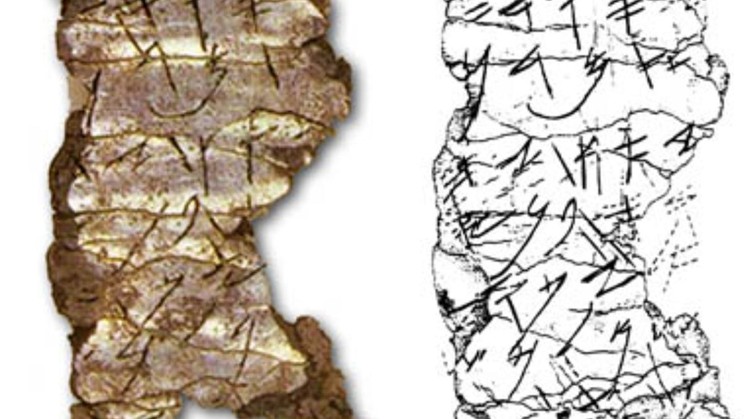
Engraved upon those ancient silver scrolls were words familiar to every student of the Bible:
Numbers 6:24–26 KJV
“The LORD bless thee, and keep thee:
The LORD make his face shine upon thee, and be gracious unto thee:
The LORD lift up his countenance upon thee, and give thee peace.”
These words are known as the Priestly Blessing or Aaronic Blessing, given by God Himself to Moses and Aaron.
The significance of this discovery cannot be overstated.
These silver scrolls date to approximately the seventh century B.C., making them the oldest biblical text ever discovered. They are centuries older than the famous Dead Sea Scrolls.
For over 2,600 years these words lay hidden beneath the soil of Jerusalem. Yet when they emerged from the dust, they proclaimed the same message of blessing, grace, protection, and peace that believers cherish today.
Imagine the scene.
More than twenty-six centuries ago, these sacred words echoed through the streets of Jerusalem. Priests pronounced them over worshippers. Parents spoke them over their children. Travelers carried them close to their hearts. Faithful men and women treasured these words enough to engrave them onto silver so that God’s blessing would accompany them wherever they went.
Then kingdoms rose and fell.
Empires came and went.
Armies marched.
Cities were destroyed.
Yet God’s Word endured.
When those silver scrolls emerged from the dust of the earth, they testified to a truth that remains unchanged:
Isaiah 40:8 KJV
“The grass withereth, the flower fadeth: but the word of our God shall stand for ever.”
The person who engraved these words understood something profound. They were not merely preserving a prayer. They were preserving a blessing. They wanted future generations to know that God’s favor, protection, and peace were worth treasuring.
The Secret of God’s Blessing
The Scriptures teach us that God’s blessing was never intended to stop with us.
The people who experienced God’s greatest blessings were often those who became a blessing to others.
Consider Abraham.
God told him:
Genesis 12:2 KJV
“And I will make of thee a great nation, and I will bless thee, and make thy name great; and thou shalt be a blessing.”
Abraham opened his tent to strangers. He welcomed guests into his home. He prayed for others. He risked his life to rescue his nephew Lot from enemy kings. God’s blessing flowed through Abraham to countless others.
God did not merely bless Abraham.
God made Abraham a blessing.
Consider Boaz.
When Ruth arrived in Bethlehem as a poor widow and a foreigner, Boaz showed compassion when many would have looked away.
He welcomed the stranger.
He fed the hungry.
He protected the vulnerable.
He blessed Ruth in the name of the LORD.
Ruth 2:12 KJV
“The LORD recompense thy work, and a full reward be given thee of the LORD God of Israel, under whose wings thou art come to trust.”
Because Boaz became a channel of God’s kindness, God honored him in a remarkable way. He became the progenitor of the Davidic dynasty and part of the earthly lineage through which Jesus Christ would come into the world.
Consider Joseph.
Though betrayed by his brothers, sold into slavery, and unjustly imprisoned, Joseph never allowed bitterness to define him.
When God raised him to power in Egypt, Joseph used his position to help others.
He cared for the welfare of Egypt.
He prepared for the years of famine.
He saved countless lives.
He forgave his brothers.
The blessings God gave Joseph became blessings for nations.
A beautiful principle emerges from all these lives:
Blessings do not come to those who cling to them for themselves alone. Blessings come to those who release them onward.
Water gives life because it flows.
A river remains fresh because it moves.
A stream nourishes the land because it continues its journey.
But stagnant water loses its freshness and usefulness.
The same principle applies to God’s blessings.
The Lord blesses us so that we may bless others.
He comforts us so that we may comfort others.
He forgives us so that we may forgive others.
He provides for us so that we may provide for others.
The ancient believer who engraved the Priestly Blessing onto silver more than 2,600 years ago understood that God’s blessings were meant to be remembered, treasured, and shared.
A Blessing for Every Generation
Today, those silver scrolls from Ketef Hinnom stand as silent witnesses to the faithfulness of God.
They remind us that God’s Word has survived every challenge.
They remind us that God’s promises endure.
They remind us that God’s blessing is still available to those who trust Him.
The words that once echoed through the streets of ancient Jerusalem still speak to us today.
The same God who watched over Israel watches over His people now.
The same God whose words were engraved on silver still speaks through His living Word.
The same God who blessed Abraham, Boaz, Joseph, and countless others still desires to bless His people and make them a blessing to the world around them.
May we receive God’s blessing with grateful hearts.
May we share that blessing with others.
And may we never forget the words that emerged from the dust after twenty-six centuries to remind us of God’s enduring grace:
Numbers 6:24–26 KJV
“The LORD bless thee, and keep thee:
The LORD make his face shine upon thee, and be gracious unto thee:
The LORD lift up his countenance upon thee, and give thee peace.”
In Christ, Darrell
